Cleaning hearing aids: build the routine for your model
The correct cleaning method depends on the device and its parts. Start with the instructions for your exact hearing aid, then ask your clinic to show you the routine and watch you repeat it.
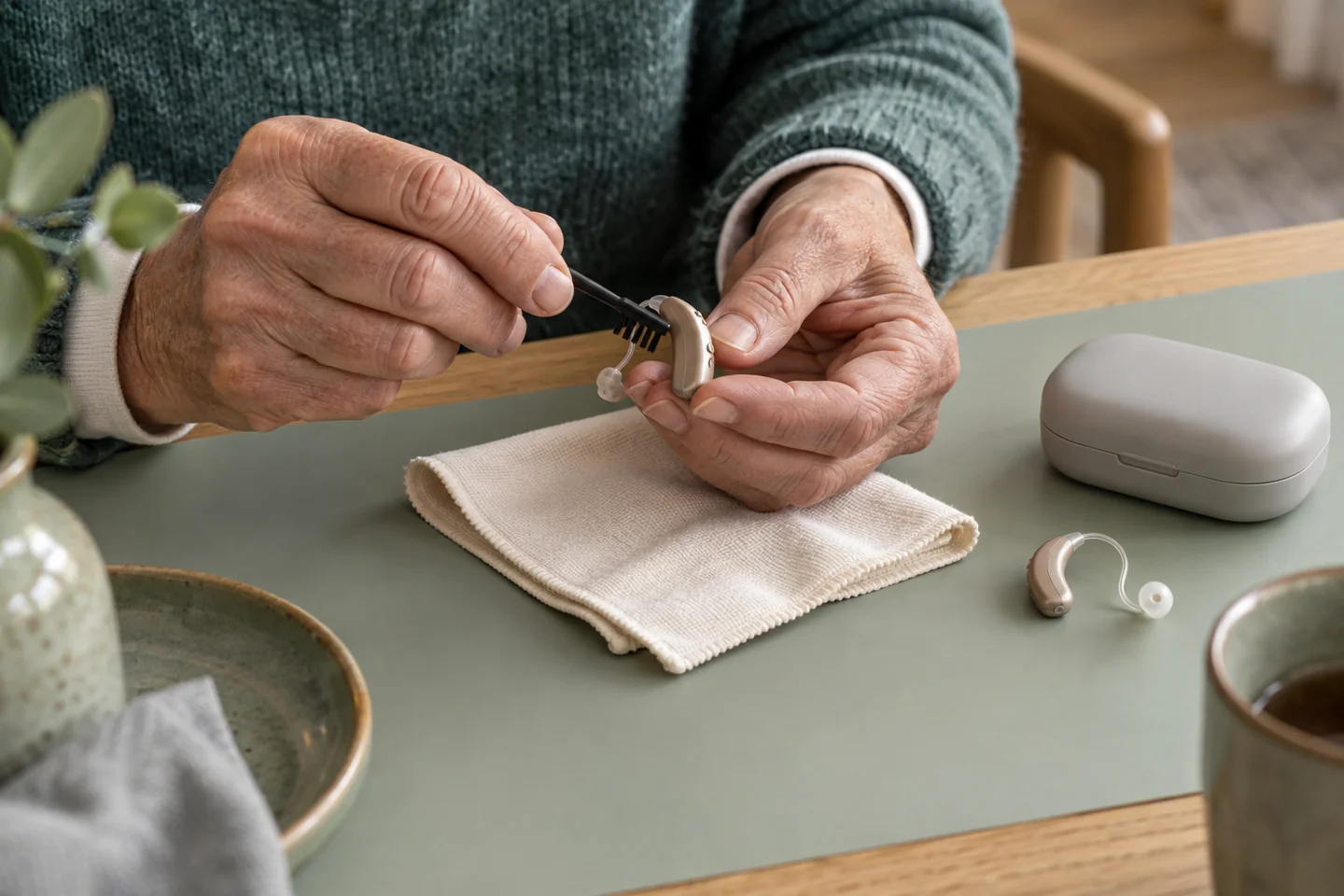
Identify the parts before cleaning
A guide for one type of hearing aid may be unsuitable for another. Dorset HealthCare publishes different cleaning guidance for earmould and thin-tube designs, illustrating why the distinction matters. Ask the clinic to name the parts of your own device and show which, if any, may be detached. Do not assume instructions to wash a separate earmould apply to the electronic hearing aid or receiver.
Create a small, consistent place for the routine
Choose a well-lit place with enough room to see the device and the tools the manufacturer recommends. A clear surface helps you notice small parts and keep right and left devices organised. Keep the relevant instruction sheet nearby. Ask the clinic for an accessible format if the supplied leaflet is hard to read or a video is difficult to follow.
Ask for a demonstration you can repeat
Rather than leaving with a bag of unfamiliar accessories, ask which item is used for each task. Repeat the steps with the professional watching, and ask them to write down how often each task should be done for your model. It is reasonable to request a second demonstration if a small movement or part is difficult to see.
- Which surfaces can be wiped, and with what?
- Is any part washable, and must it be detached first?
- Which filter, dome or tube belongs to this exact model?
- Which tasks should the clinic perform instead?
- How should the device and tools be stored?
Keep general advice separate from specific instructions
General care advice includes avoiding damaging heat and moisture and cleaning as instructed. The NIDCD also advises keeping small hearing aids and replacement batteries away from children and pets. For cleaning products, drying equipment and replacement parts, follow the device manufacturer and clinic. Do not substitute a household chemical or push a tool into an opening because it appears to fit.
When the sound changes, describe the problem
If a device sounds different or stops working, note whether the change is in one aid or both and what happened immediately beforehand. Check only the routine items you have been shown, such as charging or a user-replaceable part. If that does not resolve it, contact the provider. A problem with the device and a change in your own hearing are different possibilities; a sudden hearing change needs prompt medical assessment.
Make future help easy to find
Keep the clinic’s contact details, model name and the relevant instruction link together. Ask how to obtain the correct consumables and whether a maintenance appointment is available if you need help. Check costs and what is included in your agreement. The aim is a manageable routine you understand, with a clear route to support when the task goes beyond it.
Find a good place to begin.
Explore centres in your selected area and ask about your next step.
Find a hearing centreSources and editorial status
- Dorset HealthCare NHS — Cleaning your hearing aid · Checked September 26, 2026
- NIDCD — Hearing aids: types, selection and care · Checked September 26, 2026
General information and practical questions, not personal medical advice. This article has not had clinical review and is kept out of search-engine indexes until that review is complete.