Rechargeable hearing aids: choosing a routine that works
Rechargeable hearing aids can fit a regular charging routine, but the useful question is how the exact device and charger will work in your day. Ask for a demonstration before you decide.
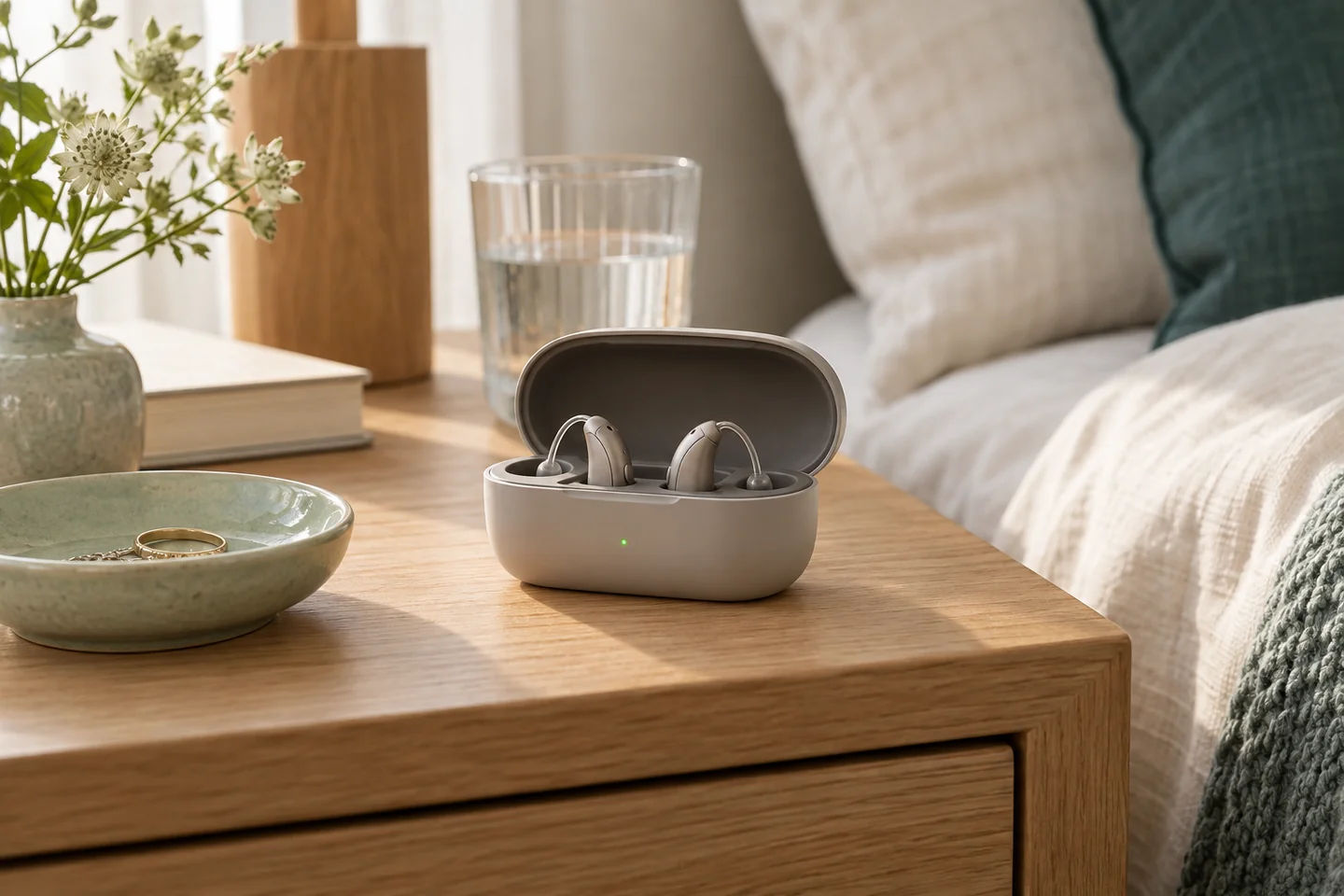
Check the device and charger together
The charger is part of the proposed setup. Some chargers need to remain connected to power; others include a battery for charging away from a socket. Oticon’s instructions show that charger design and charging time vary by model. Other manufacturers have their own instructions. Confirm which charger is included in your quote and use the guidance for that exact combination.
Sources: Oticon — Charging rechargeable hearing aids (manufacturer instructions)
Describe an ordinary day, then a long one
Tell the professional when you normally put your aids on and take them off. Include phone calls, streamed audio and activities away from home. Then describe an unusually long day, such as travelling or visiting family. Ask whether the proposed setup is appropriate for both, and what backup routine is recommended. This gives the battery discussion a concrete purpose.
Treat battery-life numbers as conditional
Manufacturer battery estimates come with conditions. Oticon lists factors including use, active features, listening environment, battery age and wireless accessories. Do not assume a figure applies to every user or every product. Ask which published estimate applies to the model being offered and what the provider expects for your stated routine.
Sources: Oticon — Desktop charger and battery-life qualifications
Try charging before leaving the clinic
Ask to place the devices in the charger yourself and identify the indicators that show charging and readiness. Check that the arrangement is easy to see and reach in the place you intend to use it. Request written instructions for the normal routine and for a missed charge. Keep the manufacturer’s support details with the model information.
- Can you place both aids correctly without assistance?
- Can you understand the charging indicators?
- Does the charger need external power in this situation?
- What should you do if one aid does not charge?
Plan for travel and servicing
Ask the clinic what you need to take when travelling and how to carry and power your charger. Confirm the manufacturer’s instructions for storage and any transport advice relevant to its batteries. Discuss how battery servicing is handled and whether a temporary solution is available if the device needs repair. Avoid assuming that a sealed rechargeable battery can be replaced at home.
Choose the routine, not just the feature name
Compare charging with the battery routine of another appropriate hearing aid if both are options. Think about what you can manage reliably and what support is available. The right question is not whether rechargeable is universally better, but whether the proposed setup suits you. Put any additional charger, travel accessory and future servicing costs in the written comparison.
Find a good place to begin.
Explore centres in your selected area and ask about your next step.
Find a hearing centreSources and editorial status
- Oticon — Charging rechargeable hearing aids (manufacturer instructions) · Checked September 26, 2026
- Oticon — Desktop charger and battery-life qualifications · Checked September 26, 2026
General information and practical questions, not personal medical advice. This article has not had clinical review and is kept out of search-engine indexes until that review is complete.