Hearing aids: a practical guide to your options
A hearing aid is part of a care process: understanding your hearing, choosing a suitable device, having it fitted and getting help afterwards. Start with the situations you want to improve.
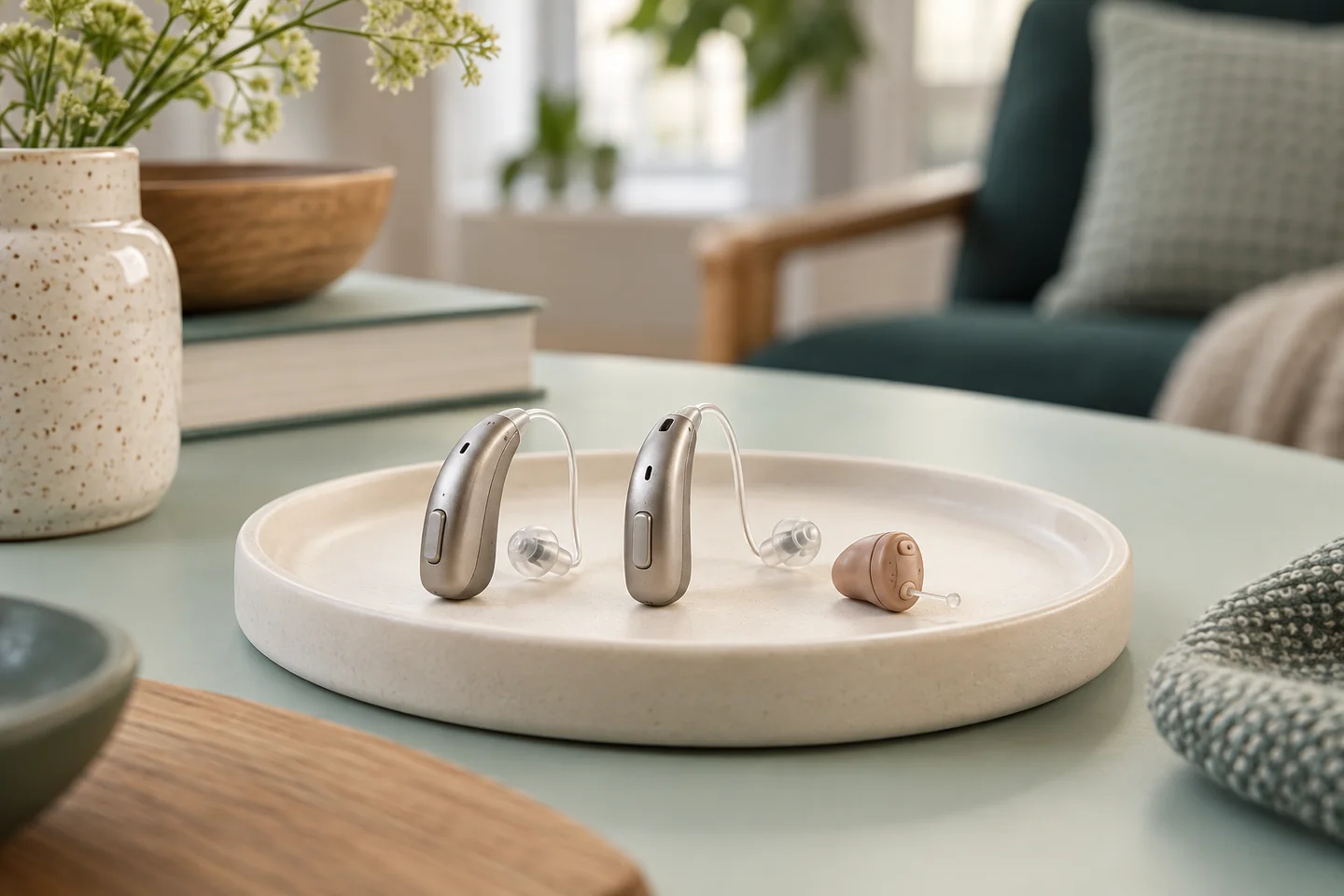
What does a hearing aid do?
A hearing aid uses a microphone, sound processing and a speaker to deliver amplified sound. It may improve access to speech and other sounds, but it does not restore normal hearing. The right approach depends on your hearing assessment and your everyday needs. An online product description cannot establish whether a particular model is appropriate for you.
Begin with three real situations
Instead of beginning with a brand, make a short description of an ordinary week. Perhaps you want to follow a conversation at the dinner table, hear a walking companion or use your phone more comfortably. Be specific about what happens and what you would like to be different. Bring those examples to the appointment so the discussion has a useful starting point.
- One-to-one conversation: where do you find it easiest and hardest?
- Groups: which places and voices are difficult to follow?
- Devices: which phone, television or other equipment do you actually use?
Understand the main styles
Some hearing aids sit behind the ear, with sound delivered through a tube or a small receiver in the ear. Others sit inside the outer ear or ear canal. A smaller device is not automatically a better fit: handling, available features and your hearing needs also matter. Ask to see the proposed style and practise holding it before deciding.
Sources: NHS — Hearing aids and implants
Compare the care around the device
A useful comparison includes more than the model name. Ask who will fit the aids, how adjustments work and where you can get help if something feels wrong. Check whether support is available in a way you can use: in person, by telephone or in writing. If the clinic is far away, discuss how often you may need to return. Request a written outline of the proposed package.
- Which appointments and adjustments are included?
- Who handles repairs, and is a temporary replacement available?
- What are the trial, return and payment conditions?
- Which accessories are essential, optional or separately priced?
Leave with an understandable next step
You do not need to memorise every technical term. Ask the professional to write down what they found, why they suggest a particular option and what happens next. If you are offered several models, request the practical difference between them in your own listening situations. You can take a trusted person along if you find a second pair of ears useful. A good next step is one you understand and can act on.
Find a good place to begin.
Explore centres in your selected area and ask about your next step.
Find a hearing centreSources and editorial status
- NIDCD — Hearing aids: types, selection and care · Checked September 26, 2026
- NHS — Hearing aids and implants · Checked September 26, 2026
General information and practical questions, not personal medical advice. This article has not had clinical review and is kept out of search-engine indexes until that review is complete.